


Osteochondrosis of the spine is a degenerative disease of the spine (that is, it is associated with the gradual destruction of the tissue and disruption of its function).The main changes are associated with the intervertebral disc (an elastic formation located between the vertebrae and a kind of shock absorber that softens the shocks and vibrations of the vertebrae relative to each other during walking).During osteochondrosis, the intervertebral discs thicken, harden and often protrude into the spinal canal, where they compress the spinal cord itself or its roots, causing relevant complaints (numbness of the skin of the arms and legs, waist, limbs).
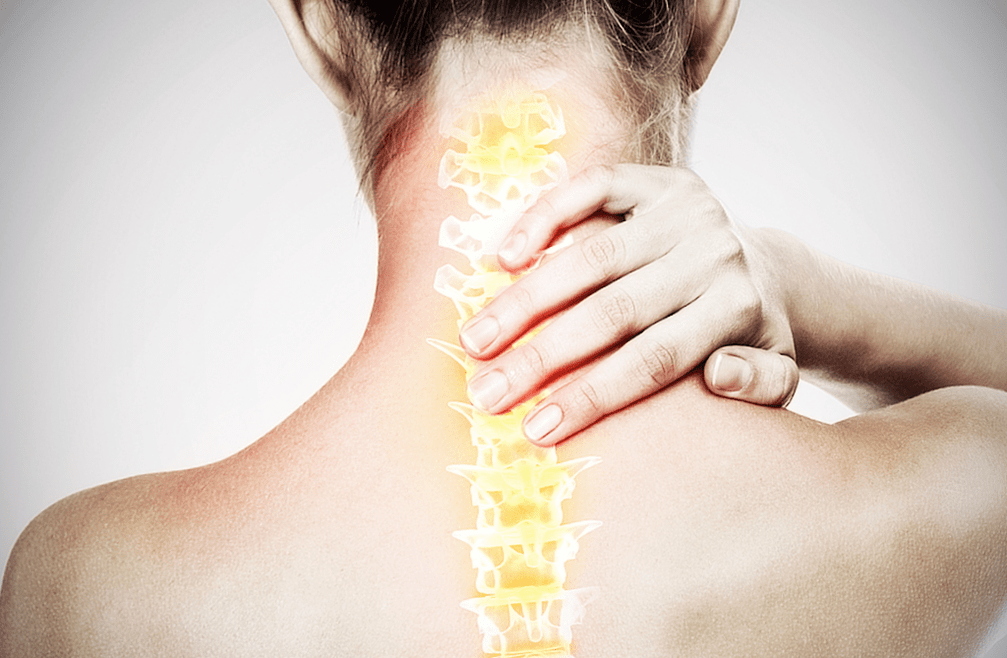
Symptoms of spinal osteochondrosis
- Back and neck pain: especially in the evening, after physical activity.
- Painful feeling of tension in individual muscles of the back.
- Numbness of the skin on the arms or legs (in the form of a separate band on the fingertips or skin).
- Weakness in the muscles of the arms or legs.
- Atrophy (thinning) of the muscles of the arms and legs.
- Dizziness, headaches: when the vertebral artery that feeds the brain is compressed between the vertebrae of the neck.
Forms
- Depending on the localization of the greatest changes in the part of the spine, the following forms of spinal osteochondrosis are distinguished:
- osteochondrosis of the cervical spine;
- osteochondrosis of the thoracic spine;
- osteochondrosis of the back.
- Depending on the structural changes occurring in the intervertebral disc (elastic formation located between the vertebrae), the following stages of spinal osteochondrosis are distinguished:
- Stage 1: intraradical movement of the disc nucleus (dense formation in the center) towards the edge;
- Stage 2: the appearance of cracks in the fibrous ring of the disc (consisting of connective tissue) and instability of the spine (excessive mobility);
- Stage 3: complete rupture of the disc into the spinal canal with prolapse in the form of a hernia, possible compression of the roots of the spinal cord;
- Stage 4: gross changes not only in the intervertebral discs, but also in the surrounding tissues (overgrowth of bone tissue, strong pathological fixation of the vertebrae to each other).
Reasons
- Excessive stress on the spine:
- occupational hazards: lifting heavy loads (for example, for loaders), long-term work in a static (immobile) position;
- excess body weight that increases the load on the spine;
- lifting excessively large objects (too heavy).
- Spinal injuries: fractures of the spine, rupture of ligaments.
- Hereditary causes: a tendency to gradual deterioration of the nutrition of the vertebrae and surrounding tissues (ligaments, intervertebral discs).
Diagnostics
- Analysis of complaints and medical history:
- How long ago did you first experience back pain, numbness in your fingers and toes, and other complaints?
- whether work or household activities involve lifting heavy objects, keeping the back and neck motionless for a long time (sitting at a desk, etc.).
- Neurological examination: looking for signs of neurological disorders (numbness in the arms or legs, curvature of the spine, pain when feeling the muscles of the back and neck).
- X-ray of the spine: this method allows you to study the structure of the spine in one or more planes, to detect the thinning of the intervertebral discs (an elastic formation located between the vertebrae), their protrusion towards the spinal canal, as well as the marginal growth of the bone tissue of the spine (osteophytes), which is the result of malnutrition and damage to the spine, spinal pain and spinal pain.disorders.
- CT (computed tomography) and MRI (magnetic resonance imaging) of the spine in the cervical and spinal regions: allows to study the structure of the spine and surrounding tissues (intervertebral discs, ligaments) in layers and reveals the thinning of the intervertebral discs, the presence and size of the spaces between the discs.
Treatment of spinal osteochondrosis
- Limiting the load on the spine (do not lift heavy objects).
- Correct distribution of the load on the spine: for example, carry bags in both hands instead of one, which makes the load more even.
- Back and neck massage.
- Physical therapy: a set of exercises that strengthen the muscles of the spine.
- Swimming.
- Acupuncture: using injections with special small needles to affect the local processes of tissue destruction of the intervertebral disc.
- Pain relievers.
- Medicines that reduce muscle tension (muscle relaxants).
- For advanced processes (prolapse of the hernia with compression of the spinal cord roots), surgical treatment (removal of the intervertebral disc, fixation of the affected part of the spine).
Complications and consequences
- Chronic back pain.
- Paralysis (weakness in arms or legs).
- Poor cerebral circulation (when the vertebral artery that feeds the brain is compressed between the vertebrae of the neck).
Prevention of spinal osteochondrosis
- Gentle work mode: moderate weight lifting, refusal to lift excessively heavy objects, periodic change of physical and mental labor (to "stretch" the spine).
- Active recreation.
- Gymnastics, morning exercises: daily performance of simple exercises involving the spine (torso twists, light bends).